Selasa, 04 April 2017

Free Ebook Burn Your Portfolio: Stuff they don't teach you in design school, but should, by Michael Janda

Free Ebook Burn Your Portfolio: Stuff they don't teach you in design school, but should, by Michael Janda

Taking into consideration concerning the excellences will certainly require certain truths and also views from some sources. Now we offer Burn Your Portfolio: Stuff They Don't Teach You In Design School, But Should, By Michael Janda as one of the resources to consider. You might not neglect that book is the best resource to address your problem. It can help you from lots of sides. When having such trouble, obtaining the ideal book is much required. It is to make offer as well as matched to the issue and ways to resolve it.
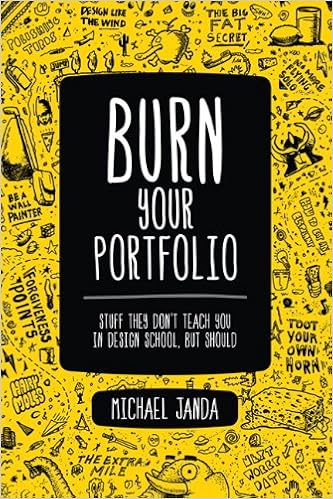
Burn Your Portfolio: Stuff they don't teach you in design school, but should, by Michael Janda

Burn Your Portfolio: Stuff they don't teach you in design school, but should, by Michael Janda


Burn Your Portfolio: Stuff they don't teach you in design school, but should, by Michael Janda


Free Ebook Burn Your Portfolio: Stuff they don't teach you in design school, but should, by Michael Janda

Need resources? From any kind of sort of the books? Try Burn Your Portfolio: Stuff They Don't Teach You In Design School, But Should, By Michael Janda This book can offer you the ideas for addressing your obligations? Obtaining brief due date? Are you still confused in obtaining the new ideas? This publication will be constantly offered for you. Yeah, certainly, this availability will concern with the very same subject of this book. When you truly need the suggestions connected to this comparable topic, you may not need to be puzzled to seek for other source.

If you have learnt about this site, it will be far better and also you have understood that guides are typically in soft documents forms. And also currently, we will welcome you with our new collection, Burn Your Portfolio: Stuff They Don't Teach You In Design School, But Should, By Michael Janda This is our updated book to provide in the checklist of this site book. You can take it as the referral for your work and also your day-to-day activity. There is no idea to come join us to locate the difficult publication. But here, you can locate it so easy that it can make you really feel satisfied.

As recognized, to complete this publication, you may not need to get it simultaneously in a day. Doing the activities along the day could make you feel so bored. If you aim to require analysis, you might favor to do other amusing activities. However, among principles we desire you to have this publication is that it will not make you feel bored. Really feeling bored when reading will certainly be just unless you do not like guide. Burn Your Portfolio: Stuff They Don't Teach You In Design School, But Should, By Michael Janda really uses what everybody wants.

Locate the Burn Your Portfolio: Stuff They Don't Teach You In Design School, But Should, By Michael Janda in this internet site based upon the link that we have actually provided. Certainly, it will remain in soft data, yet by doing this can reduce you to get and utilize this publication. This interesting publication is currently worried to the sort of basic publication creating with appealing subject to read. Besides, just how they make the cover is really clever. It is good concept to see how this publication draws in the readers. It will likewise see how the visitors will certainly select this book to go along with while spare time. Let's check and be just one of individuals that get this book.

Burn Your Portfolio: Stuff they don't teach you in design school, but should, by Michael Janda

Review

 “The straightforward and funny advice in Janda’s book is what most people learn only after toiling in the corporate trenches for years. (Um, how dare he share ALL our secrets?!) I hope he’s charging at least a year’s worth of school tuition for this book. Seriously, take copious notes on the practical suggestions offered here to help steer your own career, whether it’s your first job or your 15th freelance gig. The drama-free work approach and leadership style outlined in Burn Your Portfolio is what makes working with him and all the folks at his company, Riser, FUN and worthy of the cupcakes we send to celebrate each of our successes together.” —Michelle Sullivan VP Digital, Kids & Family Publishing and Media, National Geographic (aka 800 pound Gorilla Client) “This book should be a mandatory course at art schools…no, at all schools! The message transcends occupation; it’s about maneuvering through the unspoken rules and dynamics of various personalities in your workplace. Mike is a perfect person to deliver this message; his long-term relationships and success of his business are the true testimony of his skills on managing up, down, and sideways. Your talent alone will take you nowhere if your character doesn’t support it. If you want longevity in your field, this book is a must-read.” —Jane Bhang Consulting Art Director, Sony Pictures Entertainment “I wish I could take every designer I’ve ever worked with and smack them over the head with this book…which would hurt, because it’s big! After that, I’d tell them to read it cover to cover, because Michael Janda will show them how to stop making the business mistakes nearly everyone in design is making.” —Dave Crenshaw Author of The Myth of Multitasking and The Focused Business “Do you want to supercharge your design career? Drop that Wacom pen and immediately pick up Burn Your Portfolio, and read it cover to cover. Michael Janda clearly outlines practical, actionable advice that will make your design business better, your clients happier, and your teams more productive. Even if you’re a freelancer just striking out on your own—no, especially if you are—the insights, truisms, and humor in this book will prove to be valuable tools in your design arsenal.” —Marc Siry SVP, Media Products, NBC Universal “I’ve worked with Michael and Riser for many years, and the thing that differentiates Michael and his team from other agencies is their ability to speak my language versus design speak! Michael and his company Riser are not only super-creative, they are total professionals. Communication is a big reason why Michael and his team are so successful at what they do. They are good at not only listening to a client who is not a designer and is trying to convey the details of a project, but also on working with the client to get the job done well, on time, and also on budget. I can’t think of a better person to give advice to designers who need to work with clients in the real world.” —Melissa Van Meter VP, Marketing & Advertising, TV Guide Network

Read more

About the Author

Michael Janda has been in most positions on the graphic design world org chart over his 16-year career. He has served as production artist, designer, freelancer, and creative director (including a few years as senior creative director over two of Fox’s Internet divisions). Since 2002, Janda has owned and operated his own agency, Riser, which boasts such high-profile clients as NBC, ABC, Fox, Google, National Geographic, Warner Bros., and Disney.

Read more

Product details

Paperback: 400 pages

Publisher: New Riders; 1 edition (June 14, 2013)

Language: English

ISBN-10: 9780321918680

ISBN-13: 978-0321918680

ASIN: 0321918681

Product Dimensions:

6 x 1.1 x 9 inches

Shipping Weight: 1.7 pounds (View shipping rates and policies)

Average Customer Review:

4.5 out of 5 stars

100 customer reviews

Amazon Best Sellers Rank:

#183,799 in Books (See Top 100 in Books)

Comically written, fun to read w/ good advice

Author Michael Janda is a graphic designer and owner of his own graphic design firm. According to Janda, design schools spend roughly 90 percent of their time having students develop a portfolio. He feels that there are many additional skills needed for success, including teamwork, communication, social aptitude, production speed and business skills.This book contains some really great advice on running a business. Chapters are short, easy-to-read, and humorous. They also contain great lessons and specific examples of his learning experiences. Chapter 100, for example, is titled “Floods Happen.” It’s the story of a flood in his basement office that destroyed a bunch of work because he didn’t have a backup strategy.Although written with a light touch, Janda does a good job of conveying the reality of owning a business. He shares how much he worries, the importance of understanding your financial statements, and how to deal with clients. He also shares many of the forms and checklists that have been the basis for his success.

I did a full review of this book on my website pdn9.com, and then realized I should share the review with others considering buying it on Amazon.Score: 7.3Amount of Content 7/10Value of Content (Usefulness) 7/10Originality of Content 8/10Relevance of Content (To a Product Designer) 7/10Entertainment Level 7/10Length of Read 8/10Inspiration 7/10I just finished reading Michael Janda's book, Burn Your Portfolio, Stuff They Don't Teach You In Design School, But Should. This book's score of a 7.3 is pretty good, especially considering it was written by a graphic designer for graphic designers and I'm a product designer.This book doesn't grind down into the technical processes in creating digital art, rather Janda focuses on widely-applicable skills and habits that nearly all successful entrepreneurs have. A visual indication that I enjoyed this book is all of the shreds of post-it notes marking pages I found particularly helpful.For those unfamiliar with Michael Janda, he's the owner and operator of renowned design agency Riser. As an independent designer and director of Riser, Michael Janda has worked with clients that freelancers and agencies dream about having. Riser has proven profitable and grown year after year, and Janda's ability to understand design as a service as well as business is apparent. I'm very glad he took the time to share what he's come to learn and publish it into a great book for everyone to learn from. Now, let's look at why it scored the way it did.Amount of ContentAlthough this book is only 361 pages long, there are a lot of words on those pages, haha. Not sure how else to say it. This book is just incredibly dense. Little room is wasted and the book is deceivingly heavy. I'll go ahead and pretend that the weight is indicative of the amount of information contained within. There's plenty of information in this book in my opinion.Value of ContentI gave this category a 7 of 10. I found the content quite valuable. One way I'd find to improve this category is to include more actionable steps rather than high-level ideas and concepts. Another reason I only gave it a 7 in this category is because the book is really intended for graphic designers. Being a product designer, some of the content wasn't that valuable to me as it simply didn't relate.Originality of ContentThis book is full of original content. That's why it scored an 8 in this category. Michael's take on design is that it's a services. People skills matter in services and so he focuses on how to improve as a business owner and a human who's paid to provide a service. He pulls lots of experience from his own life which makes it entertaining and original. He also shares what he's seen work and not work. Finally, there's lots of concepts from other successful business owners and authors in this book, but Janda discusses exactly how it applies to designer.Relevance of ContentThis is a bit surprising. I'd think the relevance would be a 5 or 6, but I felt it deserved a 7. Again, since it's geared toward graphic designers, I was impressed. As a product designer I got lots of great insights on how to improve as a designer, a communicator and consultant. The merit of thoroughness and hard work is talked about in an uplifting way in this book.EntertainmentAnother 7 for this category. It's not as entertaining as an adventure or thriller book, but then again, it's about business as a designer. For the subject matter, it's well-written. There are some funny stories, but perhaps most useful are the actual experiences Michael shares which are inspiring as he's had a very successful career.Length of ReadI assigned an 8 for this category as it took me a while to read this book. It's got many short chapters (over 100), so it's pretty easy to pick the book up, knock off a few chapters and then put it down. Also, at 361 copy-heavy pages, there is a generous amount of content between the two covers of this book.InspirationSeven again! This book is perhaps a bit more aspirational than inspirational. Being pretty young in my career, Janda's accomplishments are more like milestones I'd like to hit than things I'm about to go do. The evidence he provides that a thorough, hard-work approach will take you far is inspiring and all the practices he mentions provides some sort of blueprint no matter where you're at in your career as a designer... unless you're Mr. Janda. (If that's the case, thank you so much for reading!!)Final ThoughtsBurn Your Portfolio is a fantastic book. It's full of original information that provides a look into the design business through the eyes of an agency owner. this is valuable to anyone who ever wishes to be more than just a production artist. I think there are loads of valuable resources for Product designers and (other) designers alike. It's reminded me how my clients deserve to be treated and provided some stepping stones to advance my own career.The VerdictBuy it.

For someone who just worked tirelessly to put together a portfolio, this is probably the last book I would ever think to pick up. However, this is exactly why it caught my attention. As a recent SCAD graduate, this book was the perfect insight to make it in this world as a designer. I believe that many artist/designers have high hopes of one day being the most sought after, living in a big city, and doing pretty well for themselves. Michael shares with us that while achieving those dreams are not impossible they may require a lot more work than many think or are willing to put in. This book resonates with me because of the witty insights from Michael, the beautiful illustrations, and the way it deeply relates to those of us who chose a creative career path.

Every page in this book reminds me of my self and the decisions I made, right or wrong, over the past 16 years of my career as a Graphic Designer & business owner. Michael Janda's clever and genuine writing of his own experiences throughout his successful career in the creative industry, gives voice to many who struggled just like him. This book is a must read! Not only for Graphic Designers with an entrepreneurial drive but also design students, teachers, creative professionals, and even clients who hire creative professionals.Cagan YukselFounding Owner / Creative DirectorGRAFX CO.

This book is by far the most enjoyable design related book I have read. The author Michael Janda put himself into this book and you truly feel as though you're sitting across the desk from him having a conversation. He writes with a level of open authenticity so that you feel as if you know him personally. The book is full of practical and actionable advice! I truly believe that anyone working remotely in the creative field, regardless of tenure, should read this book. Burn Your Portfolio teaches or helps you remember how to: be a good employee, co-worker, treat clients properly, deal with hard topics, and this list goes on.

Burn Your Portfolio: Stuff they don't teach you in design school, but should, by Michael Janda PDF
Burn Your Portfolio: Stuff they don't teach you in design school, but should, by Michael Janda EPub
Burn Your Portfolio: Stuff they don't teach you in design school, but should, by Michael Janda Doc
Burn Your Portfolio: Stuff they don't teach you in design school, but should, by Michael Janda iBooks
Burn Your Portfolio: Stuff they don't teach you in design school, but should, by Michael Janda rtf
Burn Your Portfolio: Stuff they don't teach you in design school, but should, by Michael Janda Mobipocket
Burn Your Portfolio: Stuff they don't teach you in design school, but should, by Michael Janda Kindle

Burn Your Portfolio: Stuff they don't teach you in design school, but should, by Michael Janda PDF

Burn Your Portfolio: Stuff they don't teach you in design school, but should, by Michael Janda PDF

Burn Your Portfolio: Stuff they don't teach you in design school, but should, by Michael Janda PDF

Sabtu, 01 April 2017

Download PDF Introduction to the Philosophies of Research and Criticism in Education and the Social SciencesBy James Paul

Download PDF Introduction to the Philosophies of Research and Criticism in Education and the Social SciencesBy James Paul

This is one of the ways when you have no ogre back then; make the book as your real pal. Even this is not type of talk-active point, you can make brand-new mind and get brand-new motivations from guide. From the literary publication, you can obtain the enjoyment as when you enjoy the film. Well, discussing the books, really just what type of publication that we will recommend? Have you found out about Introduction To The Philosophies Of Research And Criticism In Education And The Social SciencesBy James Paul

Introduction to the Philosophies of Research and Criticism in Education and the Social SciencesBy James Paul

Introduction to the Philosophies of Research and Criticism in Education and the Social SciencesBy James Paul


Introduction to the Philosophies of Research and Criticism in Education and the Social SciencesBy James Paul


Download PDF Introduction to the Philosophies of Research and Criticism in Education and the Social SciencesBy James Paul

If you are still back to back to find the ideal book to check out, we have actually provided a fantastic publication as candidates. Introduction To The Philosophies Of Research And Criticism In Education And The Social SciencesBy James Paul as one of the referred publications in this write-up can be taken pleasure in currently. It is not only regarding the title that is extremely interesting as well as brings in people to come reviewing it. And also why we offer this publication to you is that it will be your buddy along your leisure time.

We realize that everybody will require various book to read. The needs will certainly depend upon just how they work with. When they require the resources from the various other country, we will certainly not let them feel so difficult. We offer guides from abroad conveniently based upon the soft documents given in web link lists. All books that we provide remain in easy means to link and obtain, as the Introduction To The Philosophies Of Research And Criticism In Education And The Social SciencesBy James Paul in soft file in this internet site.

Checking out a book could aid you to open the new globe. From knowing nothing to recognizing every little thing can be gotten to when reading books often times. As many people claim, more books you read, more points you wish to know, yet few points you will feel. Yeah, reviewing the book will certainly lead your mind to open minded and constantly aim to seek for the other knowledge, even from lots of sources. Introduction To The Philosophies Of Research And Criticism In Education And The Social SciencesBy James Paul as a method of just how guide is advised will certainly be offered for you to obtain it.

So currently, exactly what's even more you will undergo with this publication? Simply get Introduction To The Philosophies Of Research And Criticism In Education And The Social SciencesBy James Paul asap to lead your idea to always create. When you make small way of thinking to consider difficult book to review, you will not make any development. And also see just what you will get, be sorry for will always come behind. So, do you want to become one of them? Naturally not! Reviewing as well as reviewing become one of the selections that you could aim to get over the troubles.

Introduction to the Philosophies of Research and Criticism in Education and the Social SciencesBy James Paul

This rigorous volume focuses on the underlying perspectives justifying the major approaches currently being used in educational research. Introductory chapters lay the foundation for exploring varying research perspectives. Nine specific perspectives on research—post positivism, pragmatism, constructivism, ethics and deliberate democracy, criticism, interpretivism, race/ethnicity/gender, arts-based research, and post structuralism—are examined, through discussions written by senior scholars known for their expertise in the perspective. And, a “guided tour” of criticism is given, in which these same scholars demonstrate the use of the “critical method” by critiquing six studies selected as exemplars of different research approaches. For education students who aspire to become researchers, and for those who simply need to read and understand research literature.

  • Sales Rank: #1270991 in Books
  • Published on: 2004-10-10
  • Original language: English
  • Number of items: 1
  • Dimensions: 9.00" h x 1.00" w x 7.40" l, 1.35 pounds
  • Binding: Paperback
  • 360 pages

Excerpt. © Reprinted by permission. All rights reserved.

During the last half of the 20th century, public life changed in fundamental ways that reflected, among other things, different social values, global consciousness, and new visions of the human community. Changes in concepts of communication, economics, space, time, transportation, human development, and intelligence are but a few of the life-altering changes that occurred during this time. The world we inhabit now and the values and systems of thought we use in making meaning of our lives stand in stark contrast to the world as it was before the 1960s. A part of this change was a radical transformation of thinking about knowledge. New perspectives on knowledge and approaches to acquiring or creating knowledge emerged, creating a diverse literature filled with vigorous debates about what is, and what is not, research. This book presents nine of those perspectives that now support different approaches to research and the implications of those perspectives for how we understand and critically appreciate the new pluralism in research that now exists.

Generally, students are not expected to know enough about all or even most of the different perspectives to be sophisticated in using the methods derived from those views. However, in order to read the literature and participate as a member of critical research communities, students need to have some knowledge of different perspectives and be able to think critically about the implications of the multiple discourses on knowledge and knowing that now exist.

Learning to value different approaches and to accord respect to those who hold views different from our own is an ethical matter as well as a necessary attitude for participating constructively in the conversation about the nature of research. This in no way suggests that students and researchers must believe all approaches to be equally valid or must agree with views that do not make sense to them. That, too, is an ethical matter. Rather, it suggests the need for a positive regard for those whose work is guided by different lights and for vigilance in keeping the conversation fair. Rapprochement may or may not be possible in some instances, and agreeing on basic research issues is not necessarily a goal. However, there should be a credible space where diverse scholarly perspectives are shared and valued and where an ethic of positive regard for diversity in scholarship sustains a pluralistic discourse about knowledge and ethics.

This book is intended for those who are learning to read education and related research literature as well as those preparing to become education researchers. It is intended to help students read and think critically about alternative approaches to research. The focus is not on research methods in different approaches but on the perspectives that provide the justifying reasons for those approaches.

The book begins with two chapters, both of which are essentially preamble to Parts Two and Three. In Chapter 1, I discuss some of the historical and political influences shaping the current conversations about different perspectives on research. In Chapter 2, Lynda Stone prepares those readers with a limited background in philosophy for reading and understanding Parts Two and Three. She provides foundational concepts and vocabularies related to the nature and history of philosophical arguments related to knowledge and method. Part Two includes nine research perspectives, each written by a senior scholar whose expertise in the perspective is widely known and respected. Part Three provides a "guided tour" of criticism, with the scholars introduced in Part Two demonstrating the use of critical method in applying their perspectives in critiquing six studies selected as exemplars of different research approaches or methods. In both Parts Two and Three, readers will learn the basic concepts and vocabularies of the perspectives and methods of criticism. In Chapter 11, I discuss central issues raised by a pluralistic view of research and the likely influence of critical perspectives on the future of education research.

Before the journey begins, however, a brief word about "perspectives" is needed. Throughout this text the emphasis is on different perspectives. Other words such as lens, worldview, or paradigm are used interchangeably with perspective. Although the nature of a particular perspective can be complex, it is essentially a coherent, systematic view of what is believed to be true, real, and of value. These perspectives and their use in critiquing different approaches to research form the core of this text.

The idea of perspectivism, or perspectivalism, is that there are different legitimate ways of understanding reality, different truths, and different ways of knowing the truth. This concept, associated with the work of Nietzsche in the last quarter of the 19th century, became significant in criticism of all forms of research in education and the social sciences during the last part of the 20th century. The implication of perspectivism, that knowledge is relative to the knower and the view of truth he or she holds, has divided the research community that had traditionally grounded its work in pursuit of universal truths and understandings. At issue here is whether reality is regarded as external and independent of an observer, the traditional positivist view, or a product o the mind of the observer. What may appear at first blush to be a "common sense" matter turns out to be a serious philosophical problem that, in the last quarter of the 20th century, generated a considerable literature on the nature of research and how it should be conducted.

This literature now includes multiple discourses about knowledge, each with its own vocabulary, history, worldview, and priorities. So, what is research? Or, what is "good" research? Although peer review is a mainstay for the research community in validating a researcher's work, such reviews are usually conducted within the perspective of the work being reviewed. Criticism, however, includes but also extends beyond the perspective in which the research is conducted. Perspective-based critique involves employing a point of view, a set of values, and assumptions that may be different from those of the study. For example, a quantitative study can be critiqued through a race-based, or a gender-based, lens or perspective. Such a critique yields a different view of the work. It raises questions and offers insights that are not a part of the logics and conventions of the perspective that guided the research. Some may question whether it is fair to raise questions that are outside the worldview reflected in the study As you will see, this issue is raised in the text. However, the view here is that all authoritative texts are strengthened by critique from different perspectives. For example, Biblical texts are investigated and critiqued by archaeologists, historians, linguists, and individuals with different theological perspectives, each of whom brings a particular point of view, assumptions, and knowledge to the criticism. Similarly, published research is a text that has the authority of a particular approach or method and the academic community supporting the publication. All research should be examined and critiqued from any perspective that adds information and value with respect to the methods, claims, and implications of the research. The politics of research and the ethical quandaries that can arise in the methods and substance of different approaches to research can pose great difficulty for anyone reading and interpreting the texts who does not understand the perspectives involved and the nature of criticism.

The perspectives descibed in this text include postpositivism; pragmatism; constructivism; ethics and deliberative democracy; criticism; interpretivism; race, ethnicity, and gender; arts based educational research; and poststructuralism. Each perspective reflects a point of view and assumptions about the nature of research. Each has its own constructs and poses particular dilemmas when applied to other perspectives. Each tends to privilege one or more methods or approaches to research. And, finally, each has its own utilities with respect to applications in practice.

Why these perspectives? There are other perspectives that could have been included. Conversely, it could be argued that the differences could have been illustrated by focusing on a smaller number of more distinct perspectives. For example, postpositivism places a high premium on objectivity while others, such as interpretivism, prize subjectivity. Certainly, the perspectives selected are not mutually exclusive. Critical theory and race, ethnicity, and gender perspectives are similar and the similarities and differences depend, in part, on the scholar descibing and interpreting the perspective. However, I selected these nine perspectives because, in my view, they are among the most prominent perspectives guiding research and framing criticism in the current research literature. Debates about different approaches to research are filled with concepts drawn from one or more of these perspectives. I chose to include what I consider to be a sufficiently broad sample of perspectives from several fields to enable students preparing to be researchers and those learning to read the research literature to see the similarities and differences in vocabularies, core concepts, and values of the different perspectives.

The studies critiqued are experimental, correlational, ethnographic, autoethnography, narrative, and arts based. Why these studies? Again, they do not reflect all possible approaches to research. They do, however, span a wide range of approaches in education and related research and provide critics with an opportunity to make rather clear discriminations with respect to different perspectives. Selecting an exemplar for any approach to research can be problematic. Researchers who share the same general perspective do not necessarily agree on exemplars. I consulted researchers within the different traditions and made decisions based on their advice and, in my opinion, the potential for the studies selected to serve the purpose of the text.

There is no presumption of endorsing or privileging a particular view in this text, but it would be naive to assume that preferences will not surface. Indeed, it could not be otherwise. Although the purpose here is to appreciate the nature and values of different perspectives providing the justifying reasons for different approaches to research and the complexity of the increasingly diverse cultures of inquiry, my own perspective is clearly present in the construction of this text. I believe different kinds of research approaches are needed to answer different kinds of questions. This should not be confused with an eclectic view suggesting that anything can count for research and that any critique is as good as another.

Research is a systematic approach to knowledge that leads to understanding and it should conform to the rules and reflect the values of a particular perspective. Whether or not the research is "good" should be determined by the canons of the perspective. However, there is much more to be known about the research than is revealed in the findings or the product of a study. All approaches to research should be critiqued with respect to their implicit values and applications as well as the more typical peer review that focuses on the logic of the methods consistent with the perspective guiding the research. The critic should also work within a perspective. Just as the researcher is guided by a perspective and is held accountable by an academic community of peers, so the critic should be informed by a perspective that is anchored in a set of values and has its own integrity. An art critic, for example, has knowledge of the culture and art of the period in which a work was done and brings an informed view to his or her critique of a painting. Similarly, a postpositivist, poststructuralist, or critical theorist, for example, works within a perspective, the substance of which guides the critique of any work.

Most perspectives do not leave the person of the critic out of the critique. Although the perspective guides the critique, the critic is a thinking, valuing, cultural being whose voice in the critique should not be lost. Herein lies one of the conundrums of criticism. How much of criticism is personal beliefs and values? How much of it involves applying the standards and values of a particular perspective and how much of it is a personal construction based on the critic's beliefs, values, and cultural identity? Is such a distinction artificial? Scholars differ in their responses to these questions. My own view is that the individual is always in his or her work, whether planning, conducting, and sharing the findings of a study or in critiquing the work of another researcher. Determining where and how the "personal" voice of the researcher and critic is situated is a perspective-based issue. Postpositivist researchers, for example, seek to minimize the influence of their personal values and identity on their research while interpretivists emphasize the centrality of their personal voice.

Reasonable arguments have been advanced by some that a distinction needs to be made between research and inquiry, associating research more with basic science and inquiry more with applied studies. I did not make that distinction in this text because of the complexity and diversity of the various perspectives descibed here. Research and inquiry are, therefore, used interchangeably as are the terms researcher and scholar.

Although the book is written primarily for those interested in education research, the focus extends beyond education into the social sciences. My decision to broaden the focus was based on the fact that education researchers are continuing to explore and use new approaches to research in the social sciences and there is, therefore, a need to understand the perspectives grounding those approaches. The narrative perspective included in Part Two is an example of a view of research that is beginning to be used by some education researchers. Also, autoethnography, included as one of the studies in Part Three, has gained the interest of education researchers focusing their work more on individual students and teachers. Research approaches in education have had limited success in helping educators know more about the emotional lives and emotional capacities of their students. Although the focus of the narrative study included here is not directly related to education as it is typically framed in the research literature, it is an example of, among other things, an approach to examining qualities of the emotional life which is of concern to educators.

Finally, with respect to the purpose of this text, different genres of inquiry now are part of the educational research landscape and researchers need to be able to interpret and negotiate that landscape. Some will require statistical tools, others facility in creating and interpreting texts, and still others, paints, a canvas, and brushes. The purpose here is not to elevate the relative value of what one can come to know in the laboratory, library, writer's office, or studio but to provide the basis for visiting these different sites of inquiry with informed respect.

Introduction to the Philosophies of Research and Criticism in Education and the Social SciencesBy James Paul PDF
Introduction to the Philosophies of Research and Criticism in Education and the Social SciencesBy James Paul EPub
Introduction to the Philosophies of Research and Criticism in Education and the Social SciencesBy James Paul Doc
Introduction to the Philosophies of Research and Criticism in Education and the Social SciencesBy James Paul iBooks
Introduction to the Philosophies of Research and Criticism in Education and the Social SciencesBy James Paul rtf
Introduction to the Philosophies of Research and Criticism in Education and the Social SciencesBy James Paul Mobipocket
Introduction to the Philosophies of Research and Criticism in Education and the Social SciencesBy James Paul Kindle

Introduction to the Philosophies of Research and Criticism in Education and the Social SciencesBy James Paul PDF

Introduction to the Philosophies of Research and Criticism in Education and the Social SciencesBy James Paul PDF

Introduction to the Philosophies of Research and Criticism in Education and the Social SciencesBy James Paul PDF

Sabtu, 04 Maret 2017

Free Download How to Play the Golf Short Game - Chipping and PuttingBy Alan Boyd

Free Download How to Play the Golf Short Game - Chipping and PuttingBy Alan Boyd

The advantages to consider checking out the publications How To Play The Golf Short Game - Chipping And PuttingBy Alan Boyd are coming to improve your life top quality. The life high quality will not simply about the amount of expertise you will certainly obtain. Even you review the enjoyable or entertaining e-books, it will help you to have enhancing life quality. Feeling fun will certainly lead you to do something flawlessly. Moreover, the book How To Play The Golf Short Game - Chipping And PuttingBy Alan Boyd will certainly give you the lesson to take as a great need to do something. You could not be ineffective when reading this e-book How To Play The Golf Short Game - Chipping And PuttingBy Alan Boyd

How to Play the Golf Short Game - Chipping and PuttingBy Alan Boyd

How to Play the Golf Short Game - Chipping and PuttingBy Alan Boyd


How to Play the Golf Short Game - Chipping and PuttingBy Alan Boyd


Free Download How to Play the Golf Short Game - Chipping and PuttingBy Alan Boyd

Locate your new experience by reading How To Play The Golf Short Game - Chipping And PuttingBy Alan Boyd, this book will certainly offer you completed experience regarding this life. It might not always be by yourself to obtain such experiences if you have not yet the money. To intend the trips as well as activities, you could read this kind of book. Yeah, this is a very remarkable book that will certainly supply many type of journeys.

This letter might not influence you to be smarter, however guide How To Play The Golf Short Game - Chipping And PuttingBy Alan Boyd that we offer will certainly stimulate you to be smarter. Yeah, a minimum of you'll understand more than others which don't. This is what called as the quality life improvisation. Why ought to this How To Play The Golf Short Game - Chipping And PuttingBy Alan Boyd It's due to the fact that this is your favourite style to review. If you like this How To Play The Golf Short Game - Chipping And PuttingBy Alan Boyd theme about, why do not you read the book How To Play The Golf Short Game - Chipping And PuttingBy Alan Boyd to enrich your discussion?

Checking out will certainly make straightforward means and also it's not tight enough to do. You will certainly have current publication to check out in fact, yet if you feel bored of it you could continue to get the How To Play The Golf Short Game - Chipping And PuttingBy Alan Boyd From the How To Play The Golf Short Game - Chipping And PuttingBy Alan Boyd, we will certainly remain to supply you the best book collection. When the book reads in the spare time, you can delight in exactly how exactly this publication is for. Yeah, while someone wish to obtain simplicity of reading some books, you have actually found it.

After establishing the interaction of you in order to favor such book, you can straight locate as well as reach download and install and make handle the How To Play The Golf Short Game - Chipping And PuttingBy Alan Boyd The source can be received from connect to give below. As one of the greatest publication internet site in the world, we always give the very best things. Certainly, the book that we offer constantly the book that provides incredible point to discover and also obtain. If you believe that you really need this publication currently, get it asap.

How to Play the Golf Short Game - Chipping and PuttingBy Alan Boyd

The short game is basically the business end of golf. If played well it can bring amazing satisfaction and enjoyment. Stepping up to a chip over water onto a downward sloping green is probably one of the most feared shots in golf, or putting up a two tier green to save par can be just as daunting. However, armed with the tools both mental and technical, contained in this text you will approach all of these shots with renewed confidence, the key to success around the greens lies in the pages of this book and the qualities you already have hidden in your mind. You just have to learn how to use them.
With a little practice using the exercises given and a will to improve, you will begin to see a marked improvement in your game and maybe you will see some of the principles may apply to everyday situations.
How to Play the Golf Short Game will show you how to unleash these qualities where it matters most, around the greens so that you can look forward to playing 'Happy Golf'.

  • Sales Rank: #157655 in eBooks
  • Published on: 2013-04-11
  • Released on: 2013-04-11
  • Format: Kindle eBook

How to Play the Golf Short Game - Chipping and PuttingBy Alan Boyd PDF
How to Play the Golf Short Game - Chipping and PuttingBy Alan Boyd EPub
How to Play the Golf Short Game - Chipping and PuttingBy Alan Boyd Doc
How to Play the Golf Short Game - Chipping and PuttingBy Alan Boyd iBooks
How to Play the Golf Short Game - Chipping and PuttingBy Alan Boyd rtf
How to Play the Golf Short Game - Chipping and PuttingBy Alan Boyd Mobipocket
How to Play the Golf Short Game - Chipping and PuttingBy Alan Boyd Kindle

How to Play the Golf Short Game - Chipping and PuttingBy Alan Boyd PDF

How to Play the Golf Short Game - Chipping and PuttingBy Alan Boyd PDF

How to Play the Golf Short Game - Chipping and PuttingBy Alan Boyd PDF

Jumat, 03 Maret 2017

Ebook Gold Ore Processing, Volume 15, Second Edition: Project Development and Operations (Developments in Mineral Processing)From Elsevier Sci

Ebook Gold Ore Processing, Volume 15, Second Edition: Project Development and Operations (Developments in Mineral Processing)From Elsevier Sci

This is exactly what you need to carry out in requiring what exactly we offer. This is not nonsense, this is something to produce better idea. Generally, publication will certainly not constantly influent somebody to act and think better. It will depend upon just how the people will stare and also think of the lesson offered by the book. Yet, when you have actually handled reading the book arranged, the Gold Ore Processing, Volume 15, Second Edition: Project Development And Operations (Developments In Mineral Processing)From Elsevier Sci will certainly have despite to need.

Gold Ore Processing, Volume 15, Second Edition: Project Development and Operations (Developments in Mineral Processing)From Elsevier Sci

Gold Ore Processing, Volume 15, Second Edition: Project Development and Operations (Developments in Mineral Processing)From Elsevier Sci


Gold Ore Processing, Volume 15, Second Edition: Project Development and Operations (Developments in Mineral Processing)From Elsevier Sci


Ebook Gold Ore Processing, Volume 15, Second Edition: Project Development and Operations (Developments in Mineral Processing)From Elsevier Sci

Are you searching for Gold Ore Processing, Volume 15, Second Edition: Project Development And Operations (Developments In Mineral Processing)From Elsevier Sci that becomes a reading resource quickly? Currently we welcome! We provide the book that you really require now. This publication is precisely developed for motivating many people that review it. If you really need to get the book quicker, you are in the ideal speed. This web site will certainly not only provide the book in soft data system straight. Yet, you could additionally take it directly and swiftly without spending some days to wait for or awaiting the times you have leisure time.

The appearance of this publication and the title is truly interesting. Nonetheless, the material is likewise no less passion. Every word that is made use of and also how the writer organizes the words to earn sentence and also significance are truly correct as well as appropriate. It's appropriate for the here and now circumstance. Right here, Gold Ore Processing, Volume 15, Second Edition: Project Development And Operations (Developments In Mineral Processing)From Elsevier Sci functions just how a publication is required. All components of the great books are called for. Furthermore, the key element that will certainly draw in the people to review is additionally provided flawlessly.

The here and now book in this title has actually shown up in higher problem. Some people might feel challenging to get it. But, with the high advanced technology, you could find the finest from this website. Gold Ore Processing, Volume 15, Second Edition: Project Development And Operations (Developments In Mineral Processing)From Elsevier Sci is available to be downloaded and install in the soft file. It comes as one of the detailed titles of the books develop internet collection on the planet. When you need various other book collections, just type the title and topic or the author. You can discover just what you truly look for or try to find.

Also the documents of guide remains in soft documents, it does not indicate that the material is various. It just differentiates in the form of the book provided. When you have the soft data of Gold Ore Processing, Volume 15, Second Edition: Project Development And Operations (Developments In Mineral Processing)From Elsevier Sci, you can really easy saving this documents into some certain devices. The computer system, device, and also laptops appropriate sufficient to save the book. So, wherever you are, you can be available to establish the moment to read.

Gold Ore Processing, Volume 15, Second Edition: Project Development and Operations (Developments in Mineral Processing)From Elsevier Sci

Gold Ore Processing: Project Development and Operations, Second Edition, brings together all the technical aspects relevant to modern gold ore processing, offering a practical perspective that is vital to the successful and responsible development, operation, and closure of any gold ore processing operation. This completely updated edition features coverage of established, newly implemented, and emerging technologies; updated case studies; and additional topics, including automated mineralogy and geometallurgy, cyanide code compliance, recovery of gold from e-waste, handling of gaseous emissions, mercury and arsenic, emerging non-cyanide leaching systems, hydro re-mining, water management, solid–liquid separation, and treatment of challenging ores such as double refractory carbonaceous sulfides. Outlining best practices in gold processing from a variety of perspectives, Gold Ore Processing: Project Development and Operations is a must-have reference for anyone working in the gold industry, including metallurgists, geologists, chemists, mining engineers, and many others.

  • Includes several new chapters presenting established, newly implemented, and emerging technologies in gold ore processing
  • Covers all aspects of gold ore processing, from feasibility and development stages through environmentally responsible operations, to the rehabilitation stage
  • Offers a mineralogy-based approach to gold ore process flowsheet development that has application to multiple ore types

  • Sales Rank: #1812004 in Books
  • Published on: 2016-05-31
  • Original language: English
  • Number of items: 1
  • Dimensions: 11.00" h x 2.20" w x 8.60" l, 9.28 pounds
  • Binding: Hardcover
  • 1040 pages

About the Author
Mike Adams is an experienced metallurgist and applied chemist with over 30 years in the minerals industry, covering management of a variety of bankable-level pilot test work projects, resource process development projects and metallurgical laboratories. He is the author of over 60 peer-reviewed papers, editor of two books (including Advances in Gold Ore Processing, Elsevier, Amsterdam, 2005) and serves on the Editorial Board of the international journals Minerals Engineering (2002-present) and Mineral Processing and Extractive Metallurgy Review (1994-2001). He is currently Associate Editor with Hydrometallurgy Journal (2013-present).

Gold Ore Processing, Volume 15, Second Edition: Project Development and Operations (Developments in Mineral Processing)From Elsevier Sci PDF
Gold Ore Processing, Volume 15, Second Edition: Project Development and Operations (Developments in Mineral Processing)From Elsevier Sci EPub
Gold Ore Processing, Volume 15, Second Edition: Project Development and Operations (Developments in Mineral Processing)From Elsevier Sci Doc
Gold Ore Processing, Volume 15, Second Edition: Project Development and Operations (Developments in Mineral Processing)From Elsevier Sci iBooks
Gold Ore Processing, Volume 15, Second Edition: Project Development and Operations (Developments in Mineral Processing)From Elsevier Sci rtf
Gold Ore Processing, Volume 15, Second Edition: Project Development and Operations (Developments in Mineral Processing)From Elsevier Sci Mobipocket
Gold Ore Processing, Volume 15, Second Edition: Project Development and Operations (Developments in Mineral Processing)From Elsevier Sci Kindle

Gold Ore Processing, Volume 15, Second Edition: Project Development and Operations (Developments in Mineral Processing)From Elsevier Sci PDF

Gold Ore Processing, Volume 15, Second Edition: Project Development and Operations (Developments in Mineral Processing)From Elsevier Sci PDF

Gold Ore Processing, Volume 15, Second Edition: Project Development and Operations (Developments in Mineral Processing)From Elsevier Sci PDF

Minggu, 05 Februari 2017

Download Nonlinear AcousticsBy Mark F. Hamilton, David T. Blackstock

Download Nonlinear AcousticsBy Mark F. Hamilton, David T. Blackstock

Is Nonlinear AcousticsBy Mark F. Hamilton, David T. Blackstock your much-loved boom to search for currently? It's really unpredictable that we share exactly what you need so much. Yet, as the most completed publication internet sites, we will certainly supply all publication kinds, subjects, collections from specialist writers, authors, as well as authors in this globe. By doing this may not stun you. Yeah, by searching by title or author in this website, you could discover guide required.

Nonlinear AcousticsBy Mark F. Hamilton, David T. Blackstock

Nonlinear AcousticsBy Mark F. Hamilton, David T. Blackstock


Nonlinear AcousticsBy Mark F. Hamilton, David T. Blackstock


Download Nonlinear AcousticsBy Mark F. Hamilton, David T. Blackstock

Exactly how a suggestion can be obtained? By looking at the celebrities? By checking out the sea and considering the sea weaves? Or by checking out a book Nonlinear AcousticsBy Mark F. Hamilton, David T. Blackstock Everyone will certainly have specific unique to gain the motivation. For you who are passing away of publications and still obtain the inspirations from books, it is truly terrific to be here. We will reveal you hundreds collections of the book Nonlinear AcousticsBy Mark F. Hamilton, David T. Blackstock to check out. If you such as this Nonlinear AcousticsBy Mark F. Hamilton, David T. Blackstock, you can likewise take it as all yours.

To get over the problem, we now supply you the technology to purchase guide Nonlinear AcousticsBy Mark F. Hamilton, David T. Blackstock not in a thick printed file. Yeah, reading Nonlinear AcousticsBy Mark F. Hamilton, David T. Blackstock by on the internet or obtaining the soft-file simply to check out could be one of the ways to do. You may not really feel that reviewing an e-book Nonlinear AcousticsBy Mark F. Hamilton, David T. Blackstock will be useful for you. However, in some terms, May individuals successful are those who have reading practice, included this kind of this Nonlinear AcousticsBy Mark F. Hamilton, David T. Blackstock

You may not disclose that this book will certainly give you everything, however it will give you something that can make your life much better. When other people still feels confused in picking the book, it is various with exactly what you have actually reached. By downloading and install the soft documents in this website, you could enhance the book as yours immediately. This is not type of magic style as a result of the existence of this site will certainly provide you quick ways to obtain guide.

Furthermore, when you have the analysis practice, it will certainly lead you to keep as well as move forward for better condition. A book as one of the home windows to get to better globe can be accomplished by positioning the expertise. Also you have no concepts concerning the book formerly, you can comprehend increasingly more after beginning with the first web page. So, exactly what do you think about Nonlinear AcousticsBy Mark F. Hamilton, David T. Blackstock that you can take it to review from now?

Nonlinear AcousticsBy Mark F. Hamilton, David T. Blackstock

Nonlinear Acoustics: Theory and Applications is an introductory text on the theory and applications of nonlinear acoustics. This book develops the theory on nonlinear acoustics from physical principles. The first half of the book develops the physical concepts, mathematical models, and classical methods of solution that form the theoretical framework of nonlinear acoustics. Benchmark experiences are described and many applications are discussed in detail. The second half covers special topics and applications, both theory and experiment. The material is accessible to anyone familiar with the principles normally encountered in a basic course on the physical aspects of linear acoustics. Each chapter is written byexperts in their respective fields.

Key Features
* Includes basic theory and model equations developed from first principles
* Explains the extensive history of nonlinear acoustics and the Burger' s equation
* Describes the analytical, perturbation, and numerical methods of solution
* Introduces nonlinear waves in solids
* Applications included methods for
* Determining the nonlinearity parameter
* Suppression of sound by sound
* Acoustic levitation and streaming
* Sound beams and parametric arrays
* Statistical phenomena
* Four-Wave mixing
* Phase conjugation
* Biomedical effects
* Propagation in the atmosphere, ocean, waveguides, relaxing fluids, and bubbly liquids

  • Sales Rank: #1530324 in Books
  • Published on: 1997-10-31
  • Original language: English
  • Number of items: 1
  • Dimensions: 1.12" h x 6.24" w x 9.22" l,
  • Binding: Hardcover
  • 455 pages

From the Back Cover
The present book is a unique text and reference on the theory and applications of nonlinear acoustics. Individual chapters are written by leading experts on their respective subjects. The book combined the merits of a graduate textbook format with the scholarly appeal of a research monograph for physicists and engineers.

The first half of the book develops physical concepts, mathematical models, and classical methods of solution. Benchmark experiments are also described. The second half covers special topics and applications, both theory and experiment.

About the Author
Mark F. Hamilton and David T. Blackstock are Professors of Mechanical Engineering at The University of Texas at Austin. Active in the series of International Symposia on Nonlinear Acoustics (ISNA), they were co-chairs of the 12th ISNA, held in 1990, and editors of the proceedings Frontiers of Nonlinear Acoustics (Elsevier). They have received various awards from the Acoustical Society of America for their research in nonlinear acoustics.Hamilton's interest in nonlinear acoustics began with his doctoral work under F.H. Fenlon at Pennsylvania State University. As the Acoustical Society's F.V. Hunt Postdoctoral Fellow in 1983-1984, he spent the year at the Mathematics Institute of the University of Bergen in Norway. He followed this with a second year of postdoctoral study at Applied Research Laboratories of the University of Texas at Austin. He joined the Mechanical Engineering faculty of UT at Austin in 1985. He is well know in nonlinear acoustics for his research on sound beams, waveguides, computational methods, and waves in solids.Blackstock also began his research on nonlinear acoustics as a doctoral student, in F.V. Hunt's laboratory at Harvard University. He spent the decade of the 1960s in Rochester, New York: three years at General Dynamics/Electronics and seven years in theUniversity of Rochester's Electrical Engineering Department. Since 1970 he has been at the University of Texas at Austin. Currently he holds a joint appointment at Applied Research Laboratories and the Mechanical Engineering Department. His research in nonlinear acoustics has been on the Burgers equation, weak shock theory, and various applications such as sonic boom, finite-amplitude noise, and medical ultrasonics.

Mark F. Hamilton and David T. Blackstock are Professors of Mechanical Engineering at The University of Texas at Austin. Active in the series of International Symposia on Nonlinear Acoustics (ISNA), they were co-chairs of the 12th ISNA, held in 1990, and editors of the proceedings Frontiers of Nonlinear Acoustics (Elsevier). They have receivedvarious awards from the Acoustical Society of America for their research in nonlinear acoustics.Hamilton's interest in nonlinear acoustics began with his doctoral work under F.H. Fenlon at Pennsylvania State University. As the Acoustical Society's F.V. Hunt Postdoctoral Fellow in 1983-1984, he spent the year at the Mathematics Institute of the University of Bergen in Norway. He followed this with a second year of postdoctoral study at Applied Research Laboratories of the University of Texas at Austin. He joined the Mechanical Engineering faculty of UT at Austin in 1985. He is well know in nonlinear acoustics for his research on sound beams, waveguides, computational methods, and waves in solids.Blackstock also began his research on nonlinear acoustics as a doctoral student, in F.V. Hunt's laboratory at Harvard University. He spent the decade of the 1960s in Rochester, New York: three years at General Dynamics/Electronics and seven years in theUniversity of Rochester's Electrical Engineering Department. Since 1970 he has been at the University of Texas at Austin. Currently he holds a joint appointment at Applied Research Laboratories and the Mechanical Engineering Department. His research in nonlinear acoustics has been on the Burgers equation, weak shock theory, and various applications such as sonic boom, finite-amplitude noise, and medical ultrasonics.

Nonlinear AcousticsBy Mark F. Hamilton, David T. Blackstock PDF
Nonlinear AcousticsBy Mark F. Hamilton, David T. Blackstock EPub
Nonlinear AcousticsBy Mark F. Hamilton, David T. Blackstock Doc
Nonlinear AcousticsBy Mark F. Hamilton, David T. Blackstock iBooks
Nonlinear AcousticsBy Mark F. Hamilton, David T. Blackstock rtf
Nonlinear AcousticsBy Mark F. Hamilton, David T. Blackstock Mobipocket
Nonlinear AcousticsBy Mark F. Hamilton, David T. Blackstock Kindle

Nonlinear AcousticsBy Mark F. Hamilton, David T. Blackstock PDF

Nonlinear AcousticsBy Mark F. Hamilton, David T. Blackstock PDF

Nonlinear AcousticsBy Mark F. Hamilton, David T. Blackstock PDF

Selasa, 31 Januari 2017

Download PDF Why Some Positive Thinkers Get Powerful ResultsBy Norman Vincent Peale

Download PDF Why Some Positive Thinkers Get Powerful ResultsBy Norman Vincent Peale

Presenting this book in soft documents form is actually fun. Yeah, this publication will exist in various means, as what you intend to get currently. Even this is a soft documents; you can delight in exactly how the book will motivate you. By reviewing it, you could gain not just the motivating publication yet additionally the representative most current book collection. Well, what is the book? Why Some Positive Thinkers Get Powerful ResultsBy Norman Vincent Peale, as one of the most prominent publications on the planet. So, you should review it.

Why Some Positive Thinkers Get Powerful ResultsBy Norman Vincent Peale

Why Some Positive Thinkers Get Powerful ResultsBy Norman Vincent Peale


Why Some Positive Thinkers Get Powerful ResultsBy Norman Vincent Peale


Download PDF Why Some Positive Thinkers Get Powerful ResultsBy Norman Vincent Peale

After discovering the book entitle Why Some Positive Thinkers Get Powerful ResultsBy Norman Vincent Peale in this article, you have actually found the best book that could make you feel satisfied. This publication is just one of the referred book selections based upon need. Do you really need this publication as resource as well as motivations? Taking this book as one of the recommendation can disclose you to possess the favourite publication of your own.

Well, exactly what about you that never ever read this sort of publication? This is your time to begin recognizing as well as reading this kind of book style. Never ever doubt of the Why Some Positive Thinkers Get Powerful ResultsBy Norman Vincent Peale that we provide. It will bring you to the actually brand-new life. Also it does not mean to the real brand-new life, we're sure that your life will be better. You will likewise find the new points that you never obtain from the various other resources.

Why Some Positive Thinkers Get Powerful ResultsBy Norman Vincent Peale is a type of book with very impressive suggestions to understand. Exactly how the writer begin to motivate you, exactly how the author obtain the motivations to write as this publication, as well as how the writer has an amazing minds that offer you this fantastic easy book to check out. As we mentioned formerly, the Why Some Positive Thinkers Get Powerful ResultsBy Norman Vincent Peale really comes with something devoted. If you have such ideal and also objective to actually reach, this book can be the advice to conquer it. You might not just get the knowledge pertaining to your job or duties currently. You will get more points.

Yeah, the content of this publication comes with very easy words, simple language designs, and also very easy feeling to understand. When you have actually located this advised publication to read, one to do is just by examining it in the link and also get it. You should start as soon as possible since there are also many people who have got and also checked out Why Some Positive Thinkers Get Powerful ResultsBy Norman Vincent Peale So, you will certainly not be left back to understand more concerning this book material.

Why Some Positive Thinkers Get Powerful ResultsBy Norman Vincent Peale

The world-famous creator of the life-enhancing Positive Thinking self-help program offers powerful tools for achieving success and happiness in every area of daily life

There is a definite relationship between positive thinking and positive or good results.
 
Norman Vincent Peale, one of the 20th century’s most influential self-help experts and spiritual leaders, introduced his practical and effective techniques for happiness and success in his groundbreaking book, The Power of Positive Thinking. In Why Some Positive Thinkers Get Powerful Results, Dr. Peale goes deeper, providing the specific tools you need to turn self-doubt into unshakable confidence and optimistic dreams into tangible reality.
 
Included in this essential guidebook to a better life are 10 powerful techniques for setting and realizing your goals, a 3-point plan for eliminating depression, 6 positive thoughts that will quash destructive habits and impulses, a 3-point guide to a healthy body, mind, and spirit, and much, much more. Dr. Peale will make you a believer, in your life and in yourself, with essential wisdom and practical applications designed to help you become a truly positive and fulfilled human being.


  • Sales Rank: #619806 in eBooks
  • Published on: 2015-09-29
  • Released on: 2015-09-29
  • Format: Kindle eBook

From the Inside Flap
"I am certain there is a definite relationship between positive thinking and achieving powerful results."
-- Norman Vincent Peale
Norman Vincent Peale, the man who taught America how to think positive thoughts, now takes you one step beyond the remarkable principles outlined in his previous books. He offers a straight-talking, step-by-step, scientifically sound system for turning self-doubt into self-esteem, obstacles into opportunities, and thought into action. You will learn
-- Ten rules for setting and achieving goals
-- Four creative factors that lead to successful outcomes
-- A four-part daily prescription for peace of mind
-- Ten "of course you can" principles
-- A three-point formula for getting rid of depression
-- Six positive thoughts to eliminate destructive habits
-- A three-part blueprint for spiritual and physical health
-- The single most important step toward becoming a positive person
Let Norman Vincent Peale show you how to meet bigger challenges, realize your fondest dreams, and achieve success in every aspect of your life!

About the Author
Norman Vincent Peale est celebre dans le monde entier. Il est l'un des plus grands conferenciers, auteur et motivateur contemporain.

Why Some Positive Thinkers Get Powerful ResultsBy Norman Vincent Peale PDF
Why Some Positive Thinkers Get Powerful ResultsBy Norman Vincent Peale EPub
Why Some Positive Thinkers Get Powerful ResultsBy Norman Vincent Peale Doc
Why Some Positive Thinkers Get Powerful ResultsBy Norman Vincent Peale iBooks
Why Some Positive Thinkers Get Powerful ResultsBy Norman Vincent Peale rtf
Why Some Positive Thinkers Get Powerful ResultsBy Norman Vincent Peale Mobipocket
Why Some Positive Thinkers Get Powerful ResultsBy Norman Vincent Peale Kindle

Why Some Positive Thinkers Get Powerful ResultsBy Norman Vincent Peale PDF

Why Some Positive Thinkers Get Powerful ResultsBy Norman Vincent Peale PDF

Why Some Positive Thinkers Get Powerful ResultsBy Norman Vincent Peale PDF

Selasa, 24 Januari 2017

PDF Download Physical-Layer Security: From Information Theory to Security EngineeringBy Matthieu Bloch, João Barros

PDF Download Physical-Layer Security: From Information Theory to Security EngineeringBy Matthieu Bloch, João Barros

Checking out an e-book Physical-Layer Security: From Information Theory To Security EngineeringBy Matthieu Bloch, João Barros is type of easy activity to do whenever you desire. Also reviewing whenever you desire, this task will certainly not interrupt your various other tasks; lots of people typically review the e-books Physical-Layer Security: From Information Theory To Security EngineeringBy Matthieu Bloch, João Barros when they are having the spare time. Just what about you? What do you do when having the spare time? Do not you invest for useless points? This is why you need to get the publication Physical-Layer Security: From Information Theory To Security EngineeringBy Matthieu Bloch, João Barros and also try to have reading behavior. Reading this publication Physical-Layer Security: From Information Theory To Security EngineeringBy Matthieu Bloch, João Barros will certainly not make you pointless. It will certainly offer more benefits.

Physical-Layer Security: From Information Theory to Security EngineeringBy Matthieu Bloch, João Barros

Physical-Layer Security: From Information Theory to Security EngineeringBy Matthieu Bloch, João Barros


Physical-Layer Security: From Information Theory to Security EngineeringBy Matthieu Bloch, João Barros


PDF Download Physical-Layer Security: From Information Theory to Security EngineeringBy Matthieu Bloch, João Barros

Incredible product is currently offered here. The book entitled Physical-Layer Security: From Information Theory To Security EngineeringBy Matthieu Bloch, João Barros is supplied in this website as one of the current upgraded to offer. Yeah, this is among suggested books that now many people search for guide. You may become one of those who are really fortunate today. You locate this site that will certainly offer you the best recommendation of this book.

Below, coming again and also once more the variant kinds of the books that can be your wanted options. To earn it right, you are better to choose Physical-Layer Security: From Information Theory To Security EngineeringBy Matthieu Bloch, João Barros satisfying your need currently. Even this is kind of not intriguing title to read, the writer makes a very various system of the web content. It will allow you fill up inquisitiveness as well as readiness to know much more.

After downloading the soft documents of this Physical-Layer Security: From Information Theory To Security EngineeringBy Matthieu Bloch, João Barros, you can start to read it. Yeah, this is so satisfying while someone must check out by taking their huge books; you are in your brand-new method by just manage your gadget. Or even you are operating in the office; you could still utilize the computer system to check out Physical-Layer Security: From Information Theory To Security EngineeringBy Matthieu Bloch, João Barros fully. Obviously, it will not obligate you to take many web pages. Merely web page by web page depending upon the moment that you have to review Physical-Layer Security: From Information Theory To Security EngineeringBy Matthieu Bloch, João Barros

After enhancing the spare time by reading Physical-Layer Security: From Information Theory To Security EngineeringBy Matthieu Bloch, João Barros, you can distinguish just what you will certainly get for the getaways. That's not just the entertainment, but you will certainly likewise get the new understanding as well as information upgraded. This publication is likewise suggested for it does not interrupt you with such hard thing to discover. It will certainly make you fun with the lesson to get each time you have it. Easy as well as easy to review and also recognize make many individuals enjoy this type of book.

Physical-Layer Security: From Information Theory to Security EngineeringBy Matthieu Bloch, João Barros

This complete guide to physical-layer security presents the theoretical foundations, practical implementation, challenges and benefits of a groundbreaking new model for secure communication. Using a bottom-up approach from the link level all the way to end-to-end architectures, it provides essential practical tools that enable graduate students, industry professionals and researchers to build more secure systems by exploiting the noise inherent to communications channels. The book begins with a self-contained explanation of the information-theoretic limits of secure communications at the physical layer. It then goes on to develop practical coding schemes, building on the theoretical insights and enabling readers to understand the challenges and opportunities related to the design of physical layer security schemes. Finally, applications to multi-user communications and network coding are also included.

  • Sales Rank: #2105715 in Books
  • Brand: Bloch, Matthieu/ Barros, Joao
  • Published on: 2011-11-14
  • Original language: English
  • Number of items: 1
  • Dimensions: 9.72" h x .83" w x 6.85" l, 1.72 pounds
  • Binding: Hardcover
  • 346 pages
Features
  • Used Book in Good Condition

Physical-Layer Security: From Information Theory to Security EngineeringBy Matthieu Bloch, João Barros PDF
Physical-Layer Security: From Information Theory to Security EngineeringBy Matthieu Bloch, João Barros EPub
Physical-Layer Security: From Information Theory to Security EngineeringBy Matthieu Bloch, João Barros Doc
Physical-Layer Security: From Information Theory to Security EngineeringBy Matthieu Bloch, João Barros iBooks
Physical-Layer Security: From Information Theory to Security EngineeringBy Matthieu Bloch, João Barros rtf
Physical-Layer Security: From Information Theory to Security EngineeringBy Matthieu Bloch, João Barros Mobipocket
Physical-Layer Security: From Information Theory to Security EngineeringBy Matthieu Bloch, João Barros Kindle

Physical-Layer Security: From Information Theory to Security EngineeringBy Matthieu Bloch, João Barros PDF

Physical-Layer Security: From Information Theory to Security EngineeringBy Matthieu Bloch, João Barros PDF

Physical-Layer Security: From Information Theory to Security EngineeringBy Matthieu Bloch, João Barros PDF